
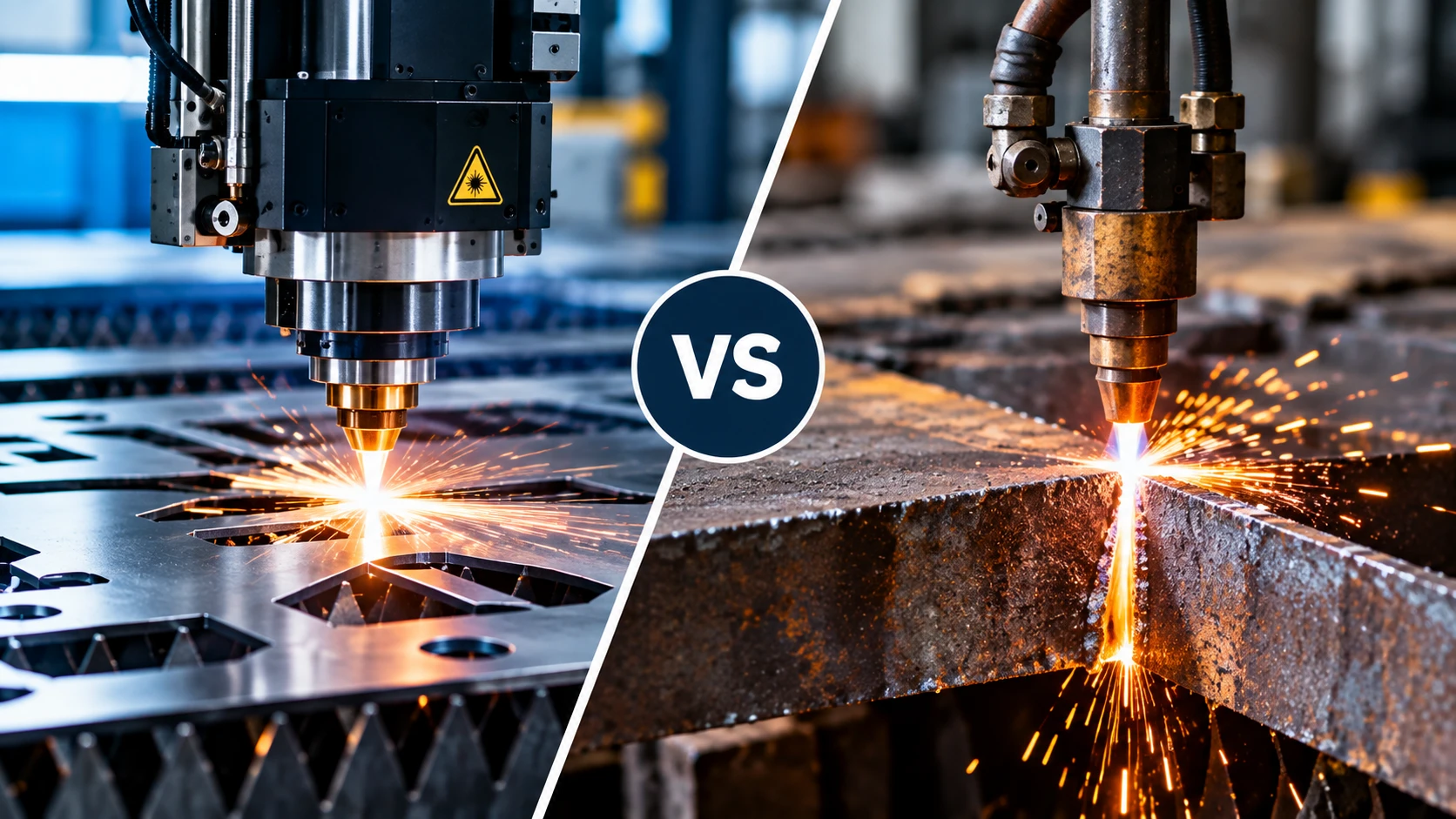
At the same time, the laser cutting process has become a go-to option, especially for those looking for precision and speed. However, neither traditional nor laser cutting method is automatically “better.” The right choice depends entirely on what your project actually requires.
Let’s see how these approaches stack up.
What Laser Cutting Brings to the Table
Here’s what stands out about laser cutting:
- Speed on Thin Material: Sheets of steel, aluminum, and stainless move quickly under a laser, especially on detailed patterns.
- Clean Edges: Most cuts need little or no deburring, which trims labor time.
- Repeatability: Once the program runs, every part comes out identical, whether the run covers 10 pieces or 10,000.
- Detail Work: If your design calls for small holes, sharp corners, or intricate shapes, the laser follows them with ease.
Because the beam never touches the metal, there’s no tool wear from contact. That keeps quality steady across long production runs and reduces the cost of replacing worn tooling.
How Traditional Cutting Methods Work
A few common examples show the range:
- Shearing slices sheet metal with a blade, fast and cheap for straight cuts.
- Sawing works well for thick bar stock and structural shapes.
- Plasma Cutting uses ionized gas to cut through thick conductive metal quickly.
- Waterjet blasts a high-pressure stream, sometimes mixed with abrasive, to cut nearly any material without heat.
These methods have decades of proven use behind them. They handle the jobs that lasers sometimes struggle with, especially when you’re dealing with thick plates or materials that are sensitive to heat. That’s why you’ll find many companies keeping both laser and traditional equipment on the floor, since each one answers a different question for you.
Comparing Cutting Precision
Traditional cutting methods vary widely in precision. Waterjet cutting produces smooth, accurate edges and rivals laser accuracy on many jobs. Plasma runs faster but leaves a rougher edge that may need cleanup. On the other hand, shearing and sawing are less precise and better suited to rough cuts that get refined later.
Here’s a quick way to think about it:
- Need extreme detail and a finished edge? Laser or waterjet.
- Need speed on rough cuts you’ll machine afterward? Shearing, sawing, or plasma.
- Working with heat-sensitive metal? Waterjet keeps things cool.
The right choice depends on how much finishing work you want to avoid down the line.
Handling Material Thickness
Traditional methods take over at heavier thicknesses:
- Plasma cuts thick conductive plates quickly and economically.
- Waterjet slices through thick material of almost any type, including metals that reflect laser beams like copper and brass.
- Sawing manages solid bars and heavy structural stock with ease.
If your project mixes thin brackets with thick structural pieces, you might find yourself using more than one method across a single job. That’s normal, and a well-equipped CNC machining company plans for it.
Weighing Design Flexibility
- The job covers prototypes that expect several revisions.
- Parts have intricate cutouts, engravings, or fine detail.
- Small batches carry frequent design changes.
Traditional methods like punching and metal stamping rely on tooling that takes time and money to produce. Once that tooling exists, though, high-volume runs move swiftly and cost less per part.
So the flexibility question comes down to volume and how frequently the design changes. Low volume with frequent changes favors lasers. The steady high volume of a fixed design favors dedicated traditional tooling.
Getting the Most from Your Material
Laser cutting tends to reduce waste because programs nest parts tightly across a sheet. The narrow cut width, called the kerf, leaves little material between pieces. Software arranges shapes to fill the sheet like a puzzle, squeezing out extra parts from the same stock.
Traditional methods vary here too:
- Waterjet also nests well and has a narrow kerf, similar to a laser.
- Plasma has a wider kerf, so it wastes a bit more between cuts.
- Shearing and punching can leave more scrap depending on part layout.
Tighter nesting means more parts per sheet, which lowers raw material cost across a run. On expensive alloys, that savings adds up fast.
Cost and Speed Trade-Offs
- Setup Cost: Laser and waterjet need minimal setup. Stamping and punching require tooling investment upfront.
- Per-Part Cost at Volume: Dedicated tooling drops per-part cost on huge runs. Lasers stay steady regardless of quantity.
- Turnaround: Digital methods start fast since there’s no tooling lead time.
- Finishing Labor: Clean laser and waterjet edges cut deburring time and cost.
If you’re working on a prototype or running a few hundred parts, you can use a laser for its speed and low setup. But when you’ve got a stable design and you’re producing millions of parts, stamping or punching tends to give you the lowest per-part price.
Making the Right Choice for Your Project
- Laser Cutting: Reach for this when you need thin, detailed parts in low to medium volume, since it gives you speed and precision without heavy setup.
- Waterjet or Plasma: These are your friends when you’re cutting thick plate or heat-sensitive metal that can’t handle the added warmth.
- Stamping or Punching: When you’ve got massive runs of a fixed design, these deliver the lowest cost per part at scale.
- Sawing or Shearing: Great for rough cuts when you’re planning to machine your pieces down later.
Many of your projects will call for a blend of these. A single assembly might need laser-cut brackets, plasma-cut plate, and sawed bar stock all in one go. When you partner with a company that keeps these capabilities in-house, you save yourself the trouble of coordinating multiple vendors and keep your timeline tight.
Let's Find the Right Cutting Method for Your Parts
That’s where having the right partner makes all the difference. H&H Inc. has spent years helping customers like you match the right cutting method to the job. With a full range of capabilities under one roof, we take the guesswork out of your production.
Contact us, and let’s talk through your parts, budget, and deadline to find the approach that works best for you.